Cities > Kuala Lumpur > 7 Things Tourists Don't Do in Kuala Lumpur, but You Should...
2) Eat the Baru
Kampung Baru: The New Village Living on Borrowed Time
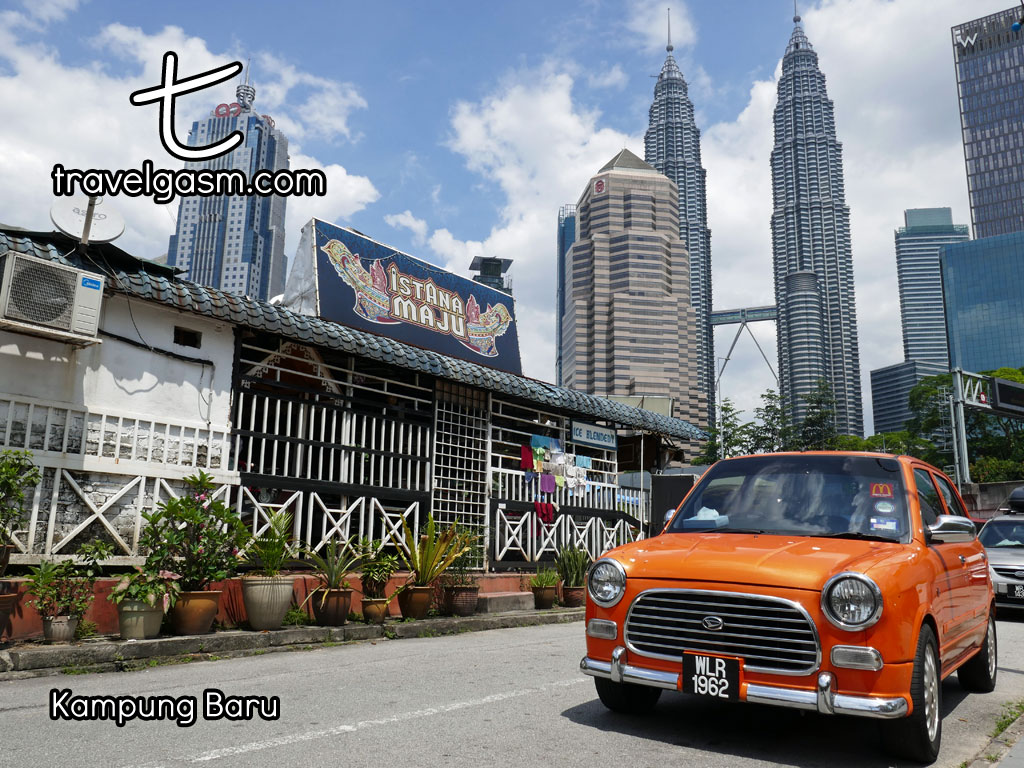
Formally established in 1899 by British Malaya as a dedicated indigenous settlement, Kampung Baru (sometimes spelled Kampong Bharu) — "New Village" in English — actually is a set of seven villages arranged in a fairly orderly grid. These seven villages originally were intended for individual ethnic groups from different parts of Malaysia and Indonesia and now are inhabited by the descendants of these settlers. To this day, only ethnically Malay people are permitted to own property in the neighbourhood.
Over the century or so since Kampung Baru was established, Kuala Lumpur has grown dramatically around it — the village now nearly is in the shadow of the Petronas Towers (KLCC) — but this quiet, unassuming collection of modest village residences and commercial buildings, some little more than shacks, soldiers on.
In recent decades, there have been many redevelopment proposals for Kampung Baru, mostly along the lines of leveling the area completely and building a new enclave of glass-clad skyscrapers much like the pleasant but sterile KLCC. One such failed proposal even was called KBCC (Kampung Baru City Centre). On again, off again discussions have continued to drag on, but so far, much of the village remains.

Some tourists do go to Kampung Baru. It does show up on some tourist maps of the city; and it is very much the kind of destination that an Asian foodie tourist, in particular, will make an effort to visit. However, it had little attention on the big tourist advisory sites at the time that travelgasm.com first wrote this piece. The vast majority of tourists in Kuala Lumpur never make it to Kampung Baru, and we think we can include it in our 7 Things Tourists Don't Do in Kuala Lumpur, but You Should, accordingly.
It has long seemed inevitable that a redevelopment plan for Kampung Baru would be accepted eventually — the land is estimated to be worth more than one billion USD — and it appears that the latest Kampong Bharu Development Masterplan 2040 (PIPKB 2040) largely has been accepted and it will be implemented piece by piece over the coming years. Although much of the area likely will be unrecognisable after redevelopment, this plan has made more of an effort to preserve at least a bit of the physical and cultural core of the district than earlier plans.
Nevertheless, the new leasehold Legasi Kampung Bharu tower hovering over the Kampung Baru LRT station — with its residential units originally "starting at" RM 1,358,000 (US$325,000) — is a not so subtle reminder of the neighbourhood's eventual fate. Until then, though, Kampung Baru is a place not only to get an idea of what Kuala Lumpur was like before its rapid development of highrises and malls in recent decades but also the ideal destination for a local Malay meal.
Locally Famous Eateries in Kampung Baru
The primary street for foodies to visit is Jalan Raja Muda Musa on the border of Kampung Paya (Marsh Village) and Kampung Masjid (Mosque Village), although there are other well-regarded eateries around the corner on Jalan Raja Alang, too. There just about always is something to eat in Kampung Baru, but more places are likely to be open starting in the late afternoon, so late afternoon or early evening is the best time to visit if eating is your primary objective.
Seven locally well-regarded vendors include the following, organised in the order of a convenient walk on our map below:
- Satay Padang - A simple roadside cart that greets you with its pleasant smell of grilled meats as you approach from the metro.
- Chunburi Seafood - Sells what it describes as masakan kampung (village food). Commonly praised for its nasi dagang (fish curry rice) and mee celup (noodle soup).
- Suraya Seafood - Inexpensive Malaysian and Thai seafood dishes like sweet and sour steamed fish and tom yam (soup).
- Nasi Lemak Wanjo - Established in 1963, this large metal shed of a restaurant is the most popular in the neighbourhood for nasi lemak (Malaysia's national dish of flavoured rice commonly served with chicken).
- Nasi Lemak Antarabangsa - Established in 1973, another popular nasi lemak place commonly considered a rival of Wanjo.
- Ayam Bakar Wong Solo - Locally famous for its Indonesian-style charcoal-grilled chicken.
- HR Steak House - Locals really love this Western saloon-themed steak house that serves relatively inexpensive steaks slathered in local variations of gravy.
On our visits, we skipped the seafood and steak places, but enjoyed the other four at one time or another. The satay at Satay Pandang was tender and well seasoned and the chicken at Ayam Bakar Wong Solo was grilled nicely with a crisp skin and moist interior. As for the rival nasi lemak joints, we preferred the sauce at Wanjo — which was deep and rich as well as more unique — but the chicken at Antarabangsa — which was juicy and much more generously portioned. Even by local standards, food is quite affordable in this neighbourhood, so there is little reason not to explore and find your own favourites, too.
If you are Malaysian, and you would like to contribute your opinions on these, or other, restaurants in Kampung Baru (or if you have thoughts about the PIPKB 2040 redevelopment proposal), please share.
Below, we've mapped out the quick route from the Kampung Baru LRT station at the edge of the awful Ampang–Kuala Lumpur Elevated Highway (E12) to the small-scale Jalan Raja Muda Musa. If Kuala Lumpur really wants to unlock the value of Kampung Baru, the city would be wise to bury this freeway entirely. Although the Saloma Link (Pintasan Saloma) people bridge added across the freeway in 2020 is attractive — and certainly better than nothing — the area still needs significantly more connecting infastructure for it to really be useful for walking. At the moment, Saloma Link is mostly a photo op.
How to Get Here: Take LRT Kelana Jaya Line (Line 5, Pink) to Kampung Baru Station (KJ11). Turn right from the station exit to begin our suggested walk. Where there is a sidewalk, the sidewalk is narrow and interrupted by storm drains. Caution: Do not step on the storm drains because the covers may be loose and you could fall into the storm sewer.
travelgasm.com's Kampung Baru Map (Full Screen)
Cities > Kuala Lumpur > Kuala Lumpur Overlooked 7 > Next: (3) Admire the Vernacular... >>
Like Kampung Baru? Tell your friends and frenemies on social media that you discovered it first:
All 7 Things Tourists Don't Do in Kuala Lumpur, but You Should:
 2) Kampung Baru
 3) Rumah Penghulu Abu Seman
 4) Bangsar Village
 5) Glutton Street
 6) Pusat Bandar Damansara
 7) Subang Jaya (SS 15)
 1) Bazaar Baru Chow Kit
Be sure to see our Top 7 Things to Do in Kuala Lumpur, too.
Intelligent and good-looking readers of travelgasm.com like you also sign up for our free mailing list.
Live in Kuala Lumpur? What's your favourite "local" thing to do? Spotted anything out-of-date or inaccurately translated? Please tell travelgasm.com. Terima kasih! Thanks!