Cities > Rome > 7 Things Tourists Don't Do in Rome, but You Should...
5) Party in Pigneto
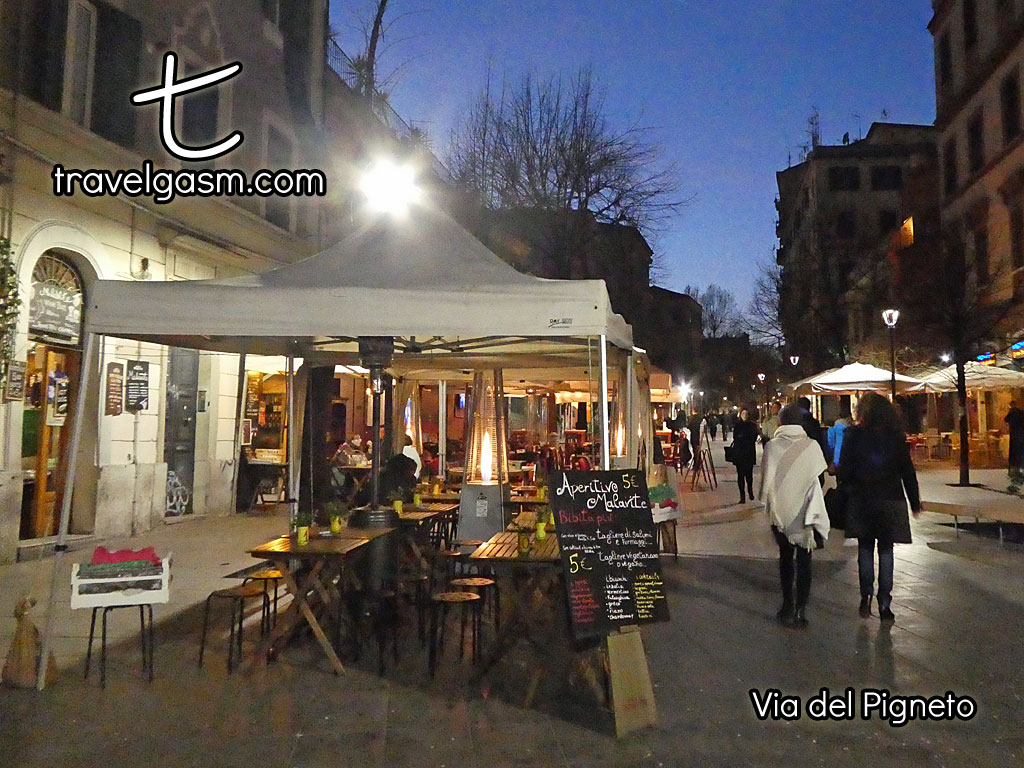
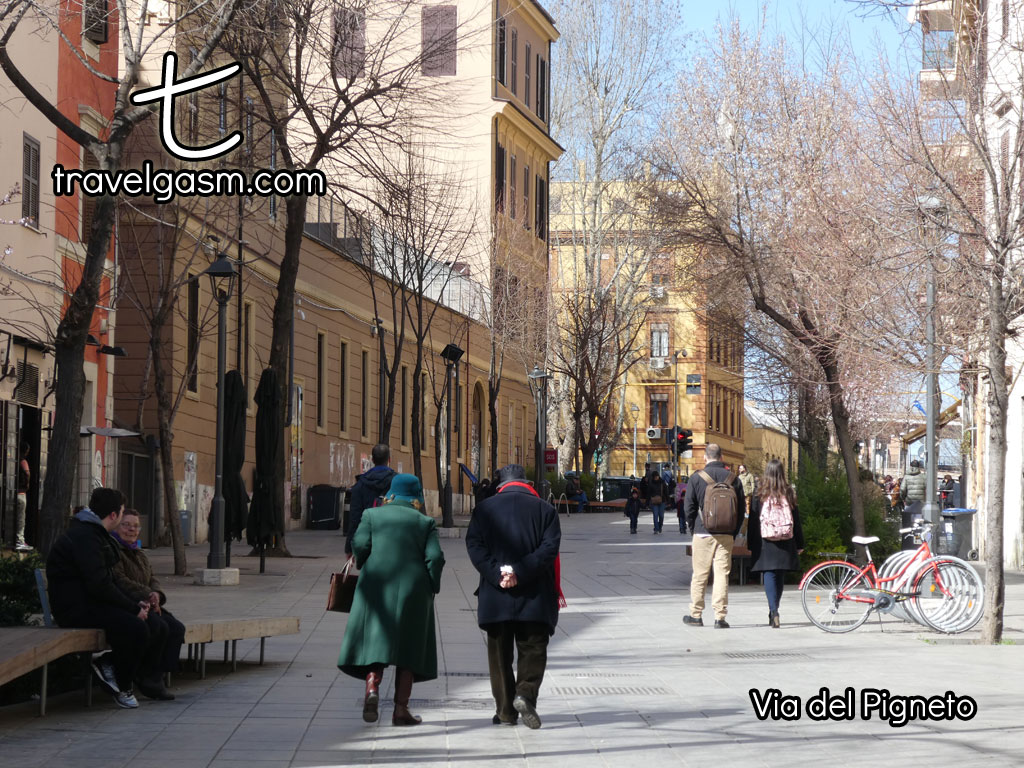
The Via del Pigneto Walking Street on Metro Line C
Located not too far to the southeast of Termini — Rome's main train station — Pigneto long has been a working-class neighborhood. Despite its relative proximity to Rome's transit hub, it was considered on the periphery of the city in the late 1800s, and it was a feasible living area for those working in the rail industry.
Perhaps unsurprisingly — given its labor-leaning roots — Pigneto became significantly Communist and a major area of resistance to both Nazi Germany and Mussolini's government during WWII. Attacked from both sides — Italian and allied forces ferreting out resistance as well as British bombing that targeted rail infrastructure and industry — this sector of Rome was hit particularly hard by the war.
After WWII, Pigneto and other areas on the then outskirts of Rome became well trod by filmmakers seeking gritty, authentic stories. One famous Italian filmmaker, Pier Paolo Pasolini, poetically described this periphery as la corona di spine che cinge la città di Dio or "the crown of thorns that surrounds the city of God." The people living in said thorns gave life to raw films of everyday struggles now classified as Italian Neorealism, considered widely to be one of the most important eras in film.
Pigneto Goes Up
Where filmmakers and other artists go, it is practically a guarantee that money will follow. Slowly, but surely, over the subsequent decades, Pigneto started to become a more desirable area. In terms of its built environment, though, the most notable inflection point for Pigneto's improvement came from within. In 1998, mothers who lived in the neighborhood wanted it to be safer for their children and successfully petitioned to make one of the main streets in the area — Via del Pigneto — a people-only walking street. The mothers' vision was much more extensive than the initial implementation (and the current implementation), but this was a critical catalyst in the improvement of the neighborhood.
By the 2000s, Pigneto started to get noticed as an "off the beaten path" destination for tourists, and by the mid-2010s, it had been dubbed the Bushwick or Hoxton of Rome by some members of the popular press comparing it to once crime-ridden — but now hipster-infested — areas of New York City and London, respectively.
With the increase in publicity — as well as the addition of a beautiful metro station on Line C in 2015 and the integration of Line C into the established metro lines in 2018 — Pigneto receives far more visitors than it once did. Nevertheless, it still had little attention on the big tourist advisory sites at the time that travelgasm.com first wrote this piece. The vast majority of tourists in Rome never make it to Pigneto, and we think we can include it in our 7 Things Tourists Don't Do in Rome, but You Should accordingly.
Pigneto still is rough around the edges, but it is clear that the thorn is not as piercing as it once was. The walking area was improved substantially in 2015, and plans are in place for further improvements to walking and transit in the district, as well. If these visions are fully implemented, it is a safe bet that the neighborhood will continue to improve. It also will receive even more visitors, particularly once Metro Line C ties directly into Colosseo Station by the Colosseum.
Popular Restaurants & Bars in Pigneto
There are dozens of restaurants and bars in Pigneto, but seven near the metro that are popular with locals or foodie visitors include:
- Rosti - A family-friendly restaurant with classic Italian food, an outdoor garden, and long community tables to encourage socializing. Gluten-free and vegan options, too.
- Necci dal 1924 - Made famous in cinema circles by its scenes in Pier Paolo Pasolini's 1961 film Accattone, this once booze-only joint now serves not only plenty of drinks but also modern Italian and international food. Reservations recommended.
- Spirito - A beautiful speakeasy-style bar with creative cocktails, tasty sandwiches, and live music. Closed Tuesdays.
- Birra+ - On the main walking street; a straightforward bar with a solid selection of beer, whiskey, and cocktails.
- Vitaminas 24 - A vegan place with a selection of international salads, sandwiches, and smoothies. Open late.
- Pigneto Quarantuno - On the main walking street; classic Italian food and an extensive wine selection.
- Liberia Tuba - A funky Feminist-friendly bookstore-bar with book readings and other special events. Closed Mondays.
Below, we've mapped out the quick route from the Pigneto metro station to the walking portion of Via del Pigneto, the bars, and the restaurants. Pay attention to your surroundings, don't drink too much, and stay on streets with crowds of people, especially after dark. Remember that the metro generally stops running around 11 PM during the week and around midnight on Saturdays, but also double check the official schedule for the day of your visit in advance and keep your departure in mind should you wisely wish to avoid taxis in Rome. Have fun!
How to Get Here: Take the Rome Metro Line C (Green) to Pigneto Station. To get to the walking street, use the west-facing exit (toward Circonvallazione Casilina). You should see a bridge over railroad tracks when you exit. Cross the bridge and the people-only portion of Via del Pigneto starts in two blocks.
Cities > Rome > Rome Overlooked 7 > Next: (6) Have a Curry by the Aqueduct... >>
Like Pigneto? Tell your friends and frenemies on social media that you discovered it first:
Intelligent and good-looking readers of travelgasm.com like you also sign up for our free mailing list.
Live in Rome? What's your favorite "local" thing to do? Spotted anything out-of-date or inaccurately translated? Please tell travelgasm.com. Grazie!